Tales of a (Formerly) Reluctant Reader: Star Wars, Clone Wars: Incredible Vehicles

Tales of a (Formerly) Reluctant Reader is a feature in which my twelve year old son, a formerly reluctant reader, reviews a book he particularly enjoyed! These words are his own and in no way influenced by his mother 🙂

  • Reading level: Ages 7 and up
  • Hardcover: 96 pages
  • Publisher: DK CHILDREN (August 15, 2011)
  • ISBN-10: 0756686911
  • Source: Publisher

We have a lot of Star Wars books in our house. Since I can remember, I have been a fan of them movies, characters & books. I have books that discuss the characters and the storylines of most of the movies.  Even after I have read all of these books, I think this is one of the best Star Wars books I have ever read. It describes in great detail nearly every vehicle mentioned, including spacecraft, landcraft, and watercraft in Star Wars Clone Wars.

The image shown of each of these vehicles are far more detailed that I have ever seen.  Here is an example: 


Each vehicle is shown, every little aspect of that vehicle diagrammed and described. You can find out which class each vehicle is in, the weapons it has, and more.  Cross-sections are provided for some of the larger vehicles. Never could I have imagined what each of these ships looked like inside!

Star Wars fans of all ages will love this book, I promise. You may notice that this book is published by DK. That is reason alone to buy this book! The pictures and details they put in each of their books is amazing! I spend hours exploring each of their books! So go out and buy it (or in my case, have your mom buy it!). I’d love to know what you think!


Posted in 7-10 years of age, 8-12 years of age, DK Publishing, Tales of A (Formerly) Reluctant Reader | 5 Comments

Guest Post: Roberta Rich, Author of The Midwife of Venice

Yesterday, I reviewed Roberta Rich’s The Midwife of Venice, a truly suspenseful piece of historical fiction. Today, I’m pleased to present a guest post with Roberta on how she came up with the topic for her book.

Venice is a jewel box of magnificent buildings, exquisite squares, and beautiful paintings. Or so I thought. Then my husband and I took a walking tour of the Venice which ended in the Jewish ghetto, founded in 1516 on one of the few islands in Venice that does not have a church.

The square of the Ghetto Nuevo is as large and as plain as a pizza without sauce. It is hemmed in by ancient tenements which struggle to reach the sky like light starved plants. Standing there, gazing around, I tried to imagine how women might have lived in those days 500 years ago¾how they fed and clothed their families in these crowded, badly constructed, unsanitary dwellings.

As I wondered how they would have given birth, the idea for The Midwife of Venice was born. My heroine would of course have to be the best midwife in all of Venice. And what I mused, would give her an advantage over all the other midwives? In the ghetto museum was a display of silver spoons. One pair was positioned in the showcase in a way that gave me an idea.

Suppose, I daydreamed, my heroine, let’s call her Hannah, was ladling out beet soup one Shabbat, soup so hot and steaming it made her hair spring into tiny curls. She plunged the silver soup ladle deep into the tureen but she dropped the handle when it grew too hot and it slid into the bowl, coming to rest against the curve of the bottom.

She took an identical spoon down from the cupboard. With her hands still stained red from the beets, she crossed one spoon over the other to form the letter X.  An idea took shape in her mind of an instrument that could bring a child’s head farther down the birth passage and hasten deliveries.

She made a rough sketch and took it to the silversmith, directing him to fashion a device, sculpting the bowl of the ‘birthing spoons’ more deeply than an ordinary spoon, and making the handles longer. A hinge held the two spoons together in the middle, so that they could be opened and closed like a pair of scissors.

At first, Hannah practiced in private by extracting onions from the cavities of raw chickens. When her dexterity improved, she used them at confinements, draping a bed sheet over the mother’s bent knees so she could not see and shooing all of the other women from the room. Midwives were burned as witches for less cause than this, so Hannah knew she must be circumspect.

And so from this seed of an idea―a pair of silver spoons in the ghetto museum ―my story grew into a novel about a conservative, sheltered woman who chooses to defy the law to deliver a Christian baby so that she may rescue her beloved husband who is a slave on the island of Malta.

……………………………………………………………………………..

Thank you, Roberta! Thanks to the publisher, I have one copy of The Midwife of Venice  to give away. To enter, please fill out the form below. The winner will be contacted via email on Friday, February 24. Due to publisher restrictions, this giveaway is open to US citizens only.

Posted in Author Guest Post | 1 Comment

Review: The Midwife of Venice by Roberta Rich

  • Paperback: 352 pages
  • Publisher: Gallery Books (February 14, 2012)
  • ISBN-10: 1451657471
  • Source: Publisher

Hannah Levi is known throughout the Jewish ghetto of Venice as a midwife that can coax the most reluctant babies out of the wombs of their mothers. The tools of her trade are “birthing spoons” that she designed herself. One evening, she is approached by a count, begging her to assist his wife who has been laboring for hours. Jews are forbidden from performing medical treatments on Christians, but Hannah, desperate to be able to pay the ransom for her husband, agrees to assist.

When she arrives, she doesn’t receive a warm welcome from many of the members of the Countess’ family. To them, she is equivalent to a witch performing magic. The Count,  desperate to have an heir, is willing to put the life of his child before that of his wife. The choice Hannah makes puts not only her life at risk, but the lives of the Countess’ baby and that of her husband.

Set in 16th century Venice, The Midwife of Venice is lush with rich historical detail. The reader not only gets a glimpse inside the social and religious customs of the time but also a unique look a the history of midwifery.  Additionally, Rich creates a vivid character in Hannah Levi, a heroine that any reader would root for. The chapters alternate between the points of view of Hannah in Venice and her husband, a prisoner in Malta. As Hannah battles to travel to Malta to save her husband, he has assumed she has died due to the plague and attempts to start a new life in her absence.  The journey Hannah embarks upon to rescue her husband adds a level of suspense to the story, something I truly enjoyed. I couldn’t read the book fast enough, I found myself putting my own “real life” on hold so I could find out what happened to Hannah. Yet when it ended, I ached for more, not because I don’t think the author concluded the story adequately, but because I didn’t want to part with the characters I’d grown to love.

Rich reinvigorates my love of historical fiction. Rich historical detail, a little bit of suspense, how can one resist? Highly recommended.

Check back tomorrow for a guest post from Roberta Rich (and a giveaway)!  Until then, please take a look at this clip of Rich discussing how she fell in love with Venice:


Posted in Gallery Books, Historical Fiction, Mystery/Suspense, Review | 5 Comments

Review: What Happened to Hannah by Mary Kay McComas

  • Paperback: 352 pages
  • Publisher: William Morrow Paperbacks; Original edition (February 7, 2012)
  • ISBN-10: 006208478X
  • Source: Publisher

Twenty years ago, Hannah ran away from her home in a rural Virginia town in order to protect herself. She has a new life in Baltimore, all but forgotten her childhood home. Until one day she receives a call from her high-school crush, informing her that her mother and sister have passed away. The only family she has remaining is her fifteen-year-old niece, Anna. As Anna’s only remaining family member, Hannah is asked to return to this world she’s attempted to forget, to become Anna’s guardian.

Reluctantly, Hannah returns. Her reunion with her former life is a difficult one, painful memories she attempted to banish come flooding back. She begins to create a new life, this one with Anna in it. Always present in the back of her mind are the ghosts of her past, threatening to come forward. She’s never been able to trust anyone and finds herself vulnerable, unable to face her abusive past. However, with the help of her niece and her high school flame, now Sheriff Grady Steadman, she fights to deal with the pain and agony of her childhood, the only way she will able to have a truly happy life with Anna.

What Happened to Hannah follows a pretty predictable pattern with predictable characters: small town girl who runs away to put an end to abuse returns home to overcome this past and form a steady relationship with her niece. Grady is desperate to find out what happened that night that Hannah ran away. Hannah continues to build walls to protect herself, unsure if Grady is seeking more information to solve a case or because he truly is concerned for her well-being.

While I can honestly say that I enjoyed this book, it didn’t really stand out against other books with similar plot themes. It is very well-written, but I found the length to be an issue as well; at over 300 pages I found that some of the material was added as filler or padding and the storyline would be much more riveting had there not been this extra material. Additionally, the flashbacks Hannah experiences at several times throughout the book are a bit distracting, as many of them took place mid-scene or mid-conversation. At times, it was hard to discern if I was reading about present day Hannah and Grady or the young couple from the past.

Another challenge I had with the book was the lack of depth surrounding the characters. I never really felt that I connected with any of them, even though I was rooting for their happiness and success.

That said, if you are looking for a light, easy, “safe” read, What Happened to Hannah is the book for you.

Be sure to check out the other stops on this tour.

Posted in General Fiction, Review, William Morrow, Women's Fiction | 3 Comments

Reuniting With A Wrinkle in Time by Madeline L’Engle

This year we celebrate the 50th anniversary of a book that forever changed my reading experience: A Wrinkle in Time by Madeleine L’Engle. Rather than write a review of this truly epic book, I will instead share my personal experience in reading this book.

It’s not often that I make this claim, but I sincerely believe that this book and I were meant to find one another. Over twenty years ago, I picked up and read A Wrinkle in Time for the first time. My main reason for picking it up was it’s status on several banned book lists. Never a true rebel, my rebellion was expressed through the reading of books banned from my own school library. These books include Uncle Tom’s Cabin, 1984, and many, many others.

The main character, Meg Murray was a fairly average little girl. Not overtly beautiful, but not hideously ugly either. She was an unremarkable girl who does something remarkable. For me, this character gave me the strength to never give up, to strive for my highest goals, to never give up. Meg used traits and gifts that she naturally possessed in order to save her father, and ultimately her younger brother, from the grasp of a dark being, referred to as IT.  Let me tell you how huge it was for me, a shy, quiet, nerdy-girl to read a book like this.  A book that wasn’t the typical (no offense) Sweet Valley High or Babysitter’s Club books that seemed to be the only books available for girls my age. I hungered for a book that was more than the light teen fare available at that time. A Wrinkle in Time was that book, a book that made me think, made me hope, made me dream.

A Wrinkle in Time also introduced me to the unknown world of science fiction. Who knew time travel could be so thrilling?  A Wrinkle in Time was one of the few books in the science fiction genre featuring a strong female character, a trait I found rewarding as a young, shy girl. One of my favorite passages, by far, was one in which the children’s lives were compared to a sonnet: “A strict form, but freedom within it.”  One of the adults within the story states: “You’re given the form, but you have to write the sonnet yourself. What you say is completely up to you.” This is a phrase that I have held dear my entire life, one that changed my outlook on life, giving me the strength and the power to rise out of my shell and assert myself.

Since it has been nearly two decades since I read A Wrinkle in Time for the first time, I gladly accepted a copy of the 5oth Anniversary edition for review. As soon as I read the first line (“It was a dark and stormy night”) I was transported to my youth, recalled reading this book, hiding under the covers, a small flashlight the only illumination that permitted me to read. I’m no psychic, but reading that first line, I knew I was in for a truly engaging read.

Reading this book again, over two decades later, I found myself reminiscing books like this, real coming-of-age books that have lasting impact. I can count on one hand books that affected me this profoundly. I wish I would have continued with this series and the characters that influenced me so greatly. While I missed out on this, I don’t plan on letting this happen with my boys. While they might not relate to the characters like I did, I do want to introduce them to the book and devour the series alongside them.

L’Engle’s story touched on issues I was ignorant of during my first reading; the symbolism she uses isn’t outright obvious but something I quickly picked up, reading as an adult: Good versus evil, freedom of choice, the beauty within. Never could I have imagined enjoying this book any more than I did as a child, but reading this book, as an adult, as a mother, I see a completely new beauty within.

Before I close, I’d be remiss not to mention some of the bonus materials contained within the 50th Anniversary commemorative edition of A Wrinkle in Time.  They include:

•       Frontispiece photo*†
•       Photo scrapbook with approximately 10 photos*†
•       Manuscript pages*†
•      Letter from 1963 Caldecott winner, Ezra Jack Keats*†
•       New introduction by Katherine Paterson, US National Ambassador for Young People’s Literature  †
•       New afterword by Madeleine L’Engle’s granddaughter Charlotte Voiklis including six never-before-seen photos †
•       Murry-O’Keefe family tree with new artwork †
•       Madeleine L’Engle’s Newbery acceptance speech

* Unique to this edition                † never previously published

For more information about this special 50th Anniversary celebration, please visit the official A Wrinkle in Time Facebook page!


What book from your childhood was most memorable for you?

Posted in Fantasy, Farrar Straus Giroux, Kid-Lit/Middle Grade, Review | 7 Comments

It’s Monday! What Are You Reading This Week?

a1

It’s Monday! What Are You Reading This Week? This is a weekly event to list the books completed last week, the books currently being read, and the books to be finish this week. It is hosted by Sheila from One Person’s Journey Through a World of  Books so stop by and join in!

Books Completed Last Week

Prime Suspect 3: Silent Victims by Lynda La Plante (review)
No Mark Upon Her by Deborah Crombie
The Next One to Fall by Hilary Davidson
A Wrinkle in Time by Madeleine L’Engle

Currently Reading

Death Masks:Dresden Files #05 by Jim Butcher (audio)
What Happened to Hannah by Mary Kay McComas
The Midwife of Venice by Roberta Rich

Books to Complete This Week

The Dressmaker by Kate Alcott
How Eskimos Keep Their Babies Warm: And Other Adventures in Parenting (from Argentina to Tanzania and Everywhere in Between) by Mei Ling Hopgood

What are you reading this week?

Posted in It's Monday What Are you Reading This Week | 3 Comments

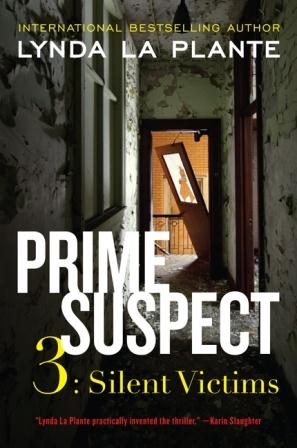
Review: Prime Suspect 3: Silent Victims by Lynda La Plante

  • Paperback: 320 pages
  • Publisher: Harper Paperbacks; Reprint edition (January 17, 2012)
  • ISBN-10: 006213441
  • Source: Publisher

Chief Detective Inspector Jane Tennison has finally moved up the ranks; she now leads the Vice Squad. On the first day of her new assignment, she’s presented with a case that may threaten all the work she’s done to build up her career.

A sixteen year old boy, burned beyond recognition, is found in the apartment of Vera Reynolds, a drag queen and night club icon. Tennison’s team leads an investigation into his death, a well-known public figure is their prime suspect.  As the case proceeds, Tennison is threatened by powerful figures to dial down her case. In order to peruse this case, Tennison’s career, her very life, is at stake.

This is the third book in the Prime Suspect series, following Prime Suspect and A Face in the Crowd. I had high hopes when I started this book; I didn’t necessarily have a great fondness for the first book, but my interest was gained after reading the second. Unfortunately, my excitement about this book was in vain. As I felt while reading Prime Suspect,  I felt no connection whatsoever to Tennison’s character.  While I sympathized with her struggles to break through the glass ceiling that hung over Scotland Yard, I honestly couldn’t find anything endearing about the main character in this book. Unfortunately, this interfered with my feelings about the book as a whole; I found it quite difficult to have any vested interest in the story, the case, the resolution. Perhaps my feelings would have been different had I started with this book rather than reading the two previous; at this point in time I believe my expectations were built up after the stunning conclusion to A Face in the Crowd.

That’s not to say that this book fails to have any value; the case Tennison and her team embark on is a chilling one that unveils a whole host of secrets buried, victims ignored. As with the previous two books the action is intense, the progression of the case is thrilling. Ultimately, I go back to the belief that my opinion of the previous books tainted my feelings about this one. With that, I would still recommend this book to readers looking for an action-packed read, particularly if you have a fondness dark, gritty crime novels.

Be sure to check out the tour page for other stops in this tour.


Posted in Crime Fiction, Harper Collins Publishers, Review | 2 Comments

Review: A Good American by Alex George

  • Hardcover: 400 pages
  • Publisher: Amy Einhorn Books/Putnam (February 7, 2012)
  • ISBN-10: 039915759X
  • Source: Publisher

It’s 1904. Frederick, a junior clerk in a small bank, falls in love with Jette, the daughter a woman striving to use her daughter’s future husband as a means to elevate herself in society. Needless to say, Frederick doesn’t exactly live up to Jette’s mother’s expectations. She’s disgusted by Frederick’s “lack of breeding” and forbids Jette from seeing him again. Of course, this just draws Jette and Frederick even closer. Soon, Jette discovers she is pregnant. Frederick is elated, Jette is a bit more realistic, knowing that her mother will never accept this child as part of the family.  Without any other options, the young couple decide to journey to a land known for new possibilities, America.  They set forth on a ship, originally planning to go to New York. When the learn the ship they are about to board will instead take them to New Orleans Jetta replies “New York, New Orleans, what’s the difference. They are both New. That’s good enough.” Embarking on this ship, they are also embarking on a new life together.  

They ultimately end up in Beatrice, Missouri, not necessarily a planned stop. Beatrice is a small town, many of the people speak German, making Frederick and Jette feel at home. It’s not long before they get settled, attempting to keep some semblance of their native land, of their roots, in this new country. So begins the story of a century of the Meisenheimer family. Surrounded by extremely unique and rich characters, each generation of this family is forced to rediscover it’s own unique identity while at the same time appreciating and understanding those before them. It is a multi-generational story of German family, determined to live the dream set out by Frederick & Jette: finding home. The story is at times humorous, oftentimes it is achingly sad.

Two key things lie in the very core of this family: music and food.  The book opens up with the line “Always, there was music.” Never have more true words been spoken. Despite the trials and tribulations the family were dealt, there was always music. Music and food. Each generation supported itself by feeding the community around it, starting with Jette and Frederick and their traditional German food. Despite the gradual transition to more American food, the family devoted itself to this life. Their restaurant served several roles throughout the years: a gathering place for those families with men in the war, during Prohibition, it became a place for people to enjoy food and entertainment. Core to it was always one element: family.

A Good American is a truly epic tale that, like good food or good wine, must be savored. The story of Frederick and Jette is told through the voice of their grandson, James.  Despite having been born in the United States, at times James is just as confused about his identity as his grandparents before him. He, like those before him, learned that family isn’t only based on blood, on heredity. Family is made up of those that surround you, envelope you, care for you.

When I began reading A Good American, I had no idea what I was in for.  I’d picked up on quite a bit of discussion about the book, but nothing too specific. I try to keep myself in the dark about highly popular books until I have had the chance to read them myself. Never could I have imagined how enamored I became with this book, the characters, everything Alex George, through the Meisenheimer family, portrayed to the reader. I laughed with the characters, cried and sobbed with them, celebrated their successes, learned from their failures. As each chapter ended, I refused to go on, but would go back and reread the passages again. I savored the story-like quality of the writing; oftentimes I felt as though I were sitting across the table from James, listening to him tell of his parents, his grandparents, and all those before him. It isn’t often that you come across a book like this anymore, one that you want to read over and over again, relishing each line. I do not exaggerate when I state that A Good American is a truly remarkable book. Highly, highly recommended.

Posted in Amy Einhorn Books, Literary Fiction, Putnam, Review | 10 Comments

It’s Monday! What Are You Reading This Week?

a1

It’s Monday! What Are You Reading This Week? This is a weekly event to list the books completed last week, the books currently being read, and the books to be finish this week. It is hosted by Sheila from One Person’s Journey Through a World of  Books so stop by and join in!

Books Completed Last Week

Defending Jacob by William Landay (review)
King of Plagues by Jonathan Maberry (audio)
(review)
Helpless by Daniel Palmer
(review)
A Good American by Alex George

Currently Reading

Prime Suspect 3: Silent Victims by Lynda La Plante
Death Masks:Dresden Files #05 by Jim Butcher (audio)

Books to Complete This Week

No Mark Upon Her by Deborah Crombie
Pure by Julianna Baggott
The Next One to Fall by Hilary Davidson

What are you reading this week?

Posted in It's Monday What Are you Reading This Week | 5 Comments

TSS: Books Spark Excellent Discussions

This week I had the pleasure of reading & reviewing two pretty outstanding books, Defending Jacob by William Landay and Helpless by Daniel Palmer. The storyline, the plot, the characters weren’t the only things that made these books outstanding. What I really found rewarding about these books in particular is the discussion they sparked, provoked, with my twelve-year-old son.

Both are fairly different books, but the similar string in both is the inability or difficulty in  protecting one’s child from the outside world. In Defending Jacob the parents protect the child they thought they knew after he is accused of murdering a classmate. In Helpless, a father must protect his daughter and an entire small town from the dangers of sexting. This book really hit home, not because this is an issue that I have to deal with my son, but because we often have to worry about the dangers of the physical world. Now we have to protect our children from the dangers of the cyber-world.

These two books in particular opened a week-long conversation with my son about bullying, how to react to bullying, safety in the cyber-world and much more. This discussion encouraged me to think of other books that generated this sort of conversation. Books spark discussion for various reasons. It can be the topic matter, the characters, the outcome, or the readers overall opinion of a book. When I find myself absolutely falling for a book, I feel the need to tell the world, to shout it from the rooftops. Oddly, I have the same urge when I read a book I do not like; I feel the need to warn other readers.

What are some books that sparked discussion with you? With whom did you discuss this/these book(s) and what about the book provoked this discussion?

Posted in Bookish Chatter, The Sunday Salon | 7 Comments