Review: Illuminations: A Novel of Hildegard Von Bingen by Mary Sharratt

  • Hardcover: 288 pages
  • Publisher: Houghton Mifflin Harcourt (October 9, 2012)
  • ISBN-10: 0547567847
  • Source: Publisher (via Netgalley)

At the age of eight, Hildegard von Bingen was offered to the Church. Starting at an early age Hildegard saw visions, mainly white orbs of light that floated around her. While she would never admit it, Hildegard’s mother was ashamed of Hildegard’s gift, instead sending her off to the Church. For the next several decades, Hildegard spent her days entombed with a young nun, Jutta von Sponheim, serving as her handmaiden. Hildegard refused to succumb to Jutta’s extreme religious practices and instead devoured books, learning about healing herbs, and celebrating her abilities. It wasn’t until Jutta died nearly thirty years later that Hildegard felt the freedom to write about her visions and began to stand up for the other young women entombed as she was.

Hildegard was witness to a number of travesties during her “religious imprisonment.” Children as young as age five given to the church by their parents, having no say to their future. The role of women in the Church was deplorable, destined to spend their entire lives entombed behind walls of stone. It wasn’t until Hildegard stood up for her own rights, and the rights of other women like her that these women, promised to devote their entire lives to the Church, gained freedom. As a result of her efforts, Hildegard is able to build a religious home for women, forever freeing them from the constraints of a corrupt Church, the first steps toward Reformation.

Ultimately, Hildegard’s story is a truly remarkable story of personal power and perseverance. In a time when visions of any sort were deemed potentially demonic or Satanic in nature, Hildegard could have very easily been ostracized due to her gift. Additionally, she had the inner strength and confidence that not many women had at this time. She wasn’t afraid to stand up against the most powerful of adversaries.

Sharratt admittedly states that takes some liberties in retelling Hildegard’s story, altering facts to make it flow properly. That said, this fictionalized retelling of Hildegard’s life is based on historical facts. Not being personally familiar with Hildegard’s story, I learned an immense amount of information about a woman so integral to the changing beliefs of the Church. All in all, a truly remarkable and enlightening read. Highly recommended.

Posted in Historical Fiction, Houghton Mifflin Harcourt, Review | 3 Comments

Mx3 Guest Post: Author Alma Katsu Recommends Dark Historicals

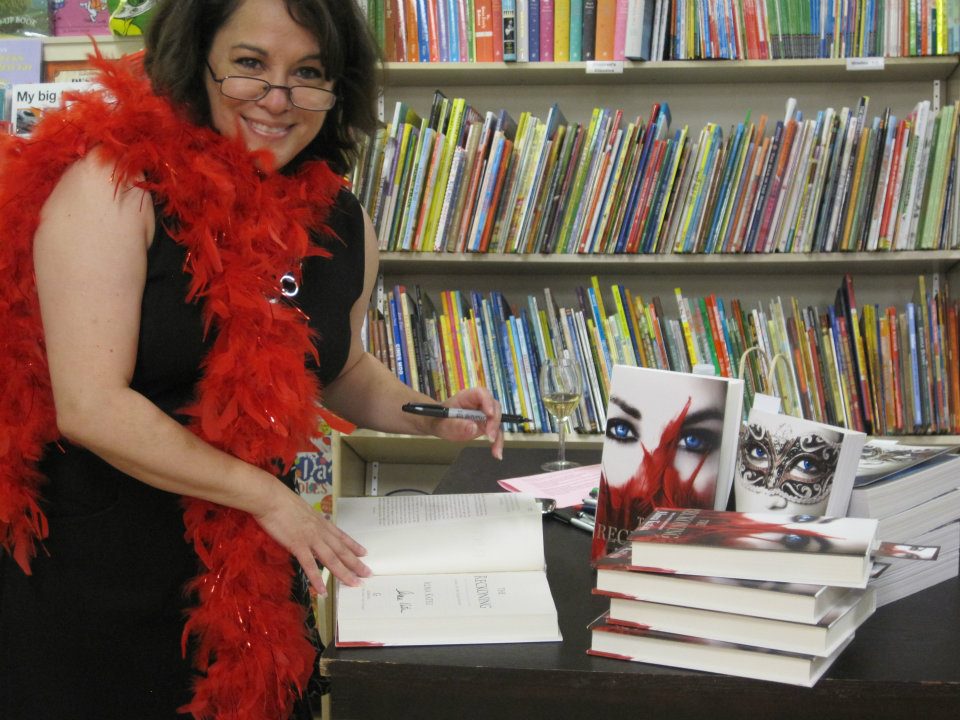
I’m pleased to welcome Alma Katsu to the blog today. Alma is the author of The Reckoning and The Taker, the first two books in a series. Fan of historical fiction, looking for the perfect dark historical to add to your October reading list? Below Alma presents some of her favorite dark historicals:


After my first novel, The Taker, was released, I received a number of queries from readers looking for similar books. The question is trickier than it seems, because both The Reckoning and The Taker combine a mix of elements—history, fantasy, the supernatural, love story—that is hard to find that same mix in other books. But I’ll go out on a limb and assume that what most readers enjoyed about my novels is the combination of history and darkness, a combination that, I think, suits the Halloween time of year. If you enjoy novels that look at the grim realities of life in another era, I recommend the following:

The Dress Lodger by Sheri Holman. (2000) The title refers to the main character, a prostitute who is outfitted by her pimp in a fancy gown in order to attract a higher-level (and better paying) clientele. She’s also the mother of a child with an abnormal heart, and is desperate to retain the service of a surgeon to save him, unawares that the doctor is beset by his own demons for past misdeeds. It’s a marvelous story of sin and redemption, told in a singular voice. And there’s grave robbing and plenty of grisly doings to put you in a spooky mood.

Slammerkin by Emma Donoghue. (2001) The NY Times said of Slammerkin, “Whatever it says about our level of enlightenment (and it’s probably not good), little seems to tickle us more than the tale of an unscrupulous woman who will stop at nothing to secure the glittery trappings of a better life, only to meet a harsh comeuppance.” Donoghue (author of last year’s smash Room) wrote this tale of a young woman who, in the mid-1700s, becomes a prostitute to get away from her desperate life. Like most of Donoghue’s work, it’s a great piece of writing.

As Meat Loves Salt by Maria McCann. (2001) I recently finished this book, though I’d been meaning to for years. I’m going to borrow another reviewer’s description: “a darkly erotic tale of passion and obsession, As Meat Loves Salt is a gripping portrait of Cromwellian England beset by war. It’s also a moving portrait of a man on the brink of madness.” An interesting character study, and you’d be hard pressed to find another novel quite like it.

The Crimson Petal and The White by Michel Faber. (2002) Faber’s sweeping epic tale of Victorian England caused a huge stir when it came out. He combines the aspirations of Sugar, a young prostitute, to pull herself out of the gutter with the downfall of William, an egotistical perfume magnate, and William’s brother Henry, a pious man who belongs to a Rescue society, trying to save the fallen like Sugar. Obviously, these three characters are meant to collide. This fat book is stuffed full of period details and deliciously constructed minor characters, and Faber juggles the multiple POVs expertly.

The Nature of Monsters by Clare Clark (2007) This novel starts off with some wonderfully sensual writing as Mary, a young girl admits that she has been erotically attracted to a man that she just realized she doesn’t love. From there it becomes a dark Gothic tale of suspense as Mary, pregnant and luckless, is forced to take a hastily-arranged position with an apothecary, a mysterious and evil man who is interested in her pregnancy for unknown means. Eventually, Mary uncovers the true nature of her master’s obsession and acts to save her unborn child and a half-wit maid also in the apothecary’s employ. What this novel is really about is class struggle, darkly told.

The Quickening Maze by Adam Foulds. (2010) Three stories are entwined in this novel about ambition, madness, and redemption set in 1840 England. John Clare is the subject of one thread, an unschooled man who becomes a poet of some renown only to be sent to High Beach Asylum, suffering from delusions and alcoholism. The second thread belongs to the doctor who runs the asylum, suffering from his own failed aspirations and poised on the brink of ruin. The third thread follows poet Alfred Tennyson, who becomes ensnared in the doctor’s wild schemes. The writing is breathtaking and makes this novel a standout.

Alma Katsu is the author of The Reckoning and The Taker (Gallery Books/Simon & Schuster), the first two books in a centuries-spanning trilogy of love, loss and redemption. The novels have been described as a mix of supernatural-powered fantasy, historical and dark romance, and frequently compared to the early works of Anne Rice and Elizabeth Kostova’s The Historian. The Taker was selected by Booklist as a top ten debut novel of 2011. You can learn more about the books at http//www.almakatsu.com  


Posted in Author Guest Post, Murders, Monsters, & Mayhem | Tagged , , | 4 Comments

Review: Ghost Town by Jason Hawes, Grant Wilson & Tim Waggoner

Paperback: 320 pages
Publisher: Gallery Books (October 9, 2012)
ISBN-10: 1451613822
Source:  Publisher

Ghost trackers Amber, Drew, and Trevor travel to Exeter, the “most haunted town in America” to present at a convention as part of Exeter’s “Dead Days” celebration. Exeter is a town known for supernatural events; decades ago a horrible flood ravaged the small town, causing numerous deaths and left a path of devastation. Sightings of spirits is common in Exeter the Dark Lady, a woman adorning a black dress is the most often spotted ghost. However, as the Dead Days celebration nears, the spiritual activity has increased dramatically, starting with the brutal death of a bookseller, literally pummeled to death by the books that adorn the shelves of a supernatural bookstore.

Amber, Drew, Trevor must track down the source of the string of killings and put an end to it before more lives are lost. When the Dark Lady makes an appearance and takes control of Mitch, Amber’s abusive ex-boyfriend, the entire investigation becomes a little more personal. Aided by the most unlikely of allies-the spirit of a former team member- the Ghost Tracker team must once again rally together to put an end to the deadly supernatural activity.

The second book in the Ghost Tracker series, Ghost Town is the perfect Halloween read for someone wanting a chilling read, but nothing too terrifying. Although it is the second book in a series, there is sufficient back story to familiarize the readers with the character and their past. Younger fans of SyFy’s Ghost Hunters series will enjoy the paranormal investigations the team embarks upon.

New to the series? The lucky winner of this week’s Murder, Monsters & Mayhem series will win both books in the series, both Ghost Trackers and Ghost Town!  All you have to do is link up a horror/thriller post in the link-up that will go life on Friday.


Posted in Gallery Books, Horror, Murders, Monsters, & Mayhem, Review | 2 Comments

TSS: Preparing for the Readathon!

Next weekend I’m participating in the 24 Hour readathon, the bookish event I look forward most to in the fall. Fall brings cool and crisp weather, perfect for spending indoors, curled up with a stack of great books. I have my snacks lined up, including my emergency middle of the night cookies. I have yet to pick my reading line-up but that’s usually the easiest part of the process!

My boys are planning on joining me, mainly because they want to take part in the food but I’m sure they’ll do a little bit of reading as well.

I’ll be spending the rest of this four day weekend preparing for Week 2 of Murder, Monsters & Mayhem. If you haven’t signed up, there’s still time!  Also, if you have a horror/ thriller post, remember to link it up!

Are you joining in the readathon next weekend? What are you planning on reading?

Tentative reading pile:

 
Print books:
Flesh & Bone by Jonathan Maberry
The Diviners by Libba Bray
Others by James Herbert
The Other by Thomas Tryon
Breeding Ground by Sarah Pinborough

eBooks:
The Wrong Goodbye by Chris F. Holm
Survivors by Sophie Littlefield

Posted in The Sunday Salon | 6 Comments

2012 Murder Monsters & Mayhem: Week 1 Wrap-Up/Link-Up

I certainly hope you’ve enjoyed the first week of Murder, Monsters & Mayhem!  Here’s a quick wrap-up:

If you’ve reviewed a horror/thriller book or movie, be sure to include your link below! Remember, you must sign-up as a participant of Murder, Monsters & Mayhem to be eligible! The winner will receive a copy of The House That Jack Built as well as some Halloween goodies! Each post earns you an entry, so I encourage you to post often! Each week I’ll host a similar giveaway, so if you didn’t have the chance to post this week you still have a chance!


Posted in Murders, Monsters, & Mayhem | 1 Comment

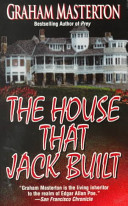
Mx3 Review: The House that Jack Built by Graham Masterton

  • Publisher: Carroll & Graf Pub (October 1996)
  • ISBN-10: 0786703539
  • Source: Personal Copy

Craig is a high-strung, international lawyer. Running late to an important meeting, he’s grabbed by a young woman claiming her friend was being attacked. Craig reluctantly goes to her aid and falls into a trap, discovering far too late that he’s been deceived. He’s attacked by a group of men and severely wounded, the sort of wound that destroys his self-confidence, his manhood shattered.  His wife, Effie, takes him on a trip to upstate New York in an attempt to restore his confidence and save their floundering marriage.

It is on this trip that they come across Valhalla, a run-down mansion built and owned by notorious gambler named Jack Belias in the late 1920s.  The mansion is in shambles: the roof has caved in in several locations, the marble floor requiring significant repair. The cost to repair the mansion alone go into the six figures. Effie is startled to learn that Craig is actually contemplating the purchase of the mansion, but he becomes obsessed with it, claiming he was meant to live there. Happy to see Craig’s spirits raised but obviously worried about the financial aspect of the purchase, Effie doesn’t hide her feelings about Valhalla from Craig. Yet just days after visiting the mansion, Craig has begun to change. For the positive at first, but soon his entire demeanor changes. The couple hasn’t made love since Craig’s accident, but when they finally do, Craig demeans Effie, calling her all sorts of disrespectful names.

Effie’s feelings intensify when she believes she hears a woman crying in the upper levels of the mansion. Additionally, on a few occasions she sees a man with strange, clouded eyes running about the house.  Effie consults Pepper Moriarty, a local psychic, to get to the root of what has been happening at Valhalla. The mansion is more than haunted; it’s pulling Craig, Effie, and Pepper into the past, their lives running parallel to those of Jack Belias and his young mistress. The house is so evil that the individuals who resided with it still remain within its walls, ready to take control of the new inhabitants.

The House That Jack Built is just one example of Masterton’s talent at writing an atypical horror novel. It goes beyond the supernatural, more than just your average haunted house story. A truly imaginative concept that grabs the reader from the start, forcing them to become invested in the story early on. The setting itself is truly haunting, quite reminiscent of some of Poe’s writing.

There are aspects of the novel that are a bit gory and some scenes of a graphic sexual nature. That said, none of it is gratuitous or unnecessary, but all building to the plot and overall mood of the novel.

Therefore, if you are looking for something beyond the typical haunted house story, this is the novel for you. Highly recommended.


Posted in Horror, Murders, Monsters, & Mayhem, Review | Tagged | 1 Comment

#Mx3 Guest Post: Why Horror by Graham Masterton

Today I’m excited to present you all with a guest post from one of my favorite horror authors, Graham Masterton. Following is a bio taken from his web site:

Graham Masterton’s debut as a horror author began with The Manitou in 1976, a chilling tale of a Native American medicine man reborn in the present day to exact his revenge on the white man. It became an instant bestseller and was filmed with Tony Curtis, Susan Strasberg, Burgess Meredith, Michael Ansara, Stella Stevens and Ann Sothern.

Since then Graham has published more than 35 horror novels, including Charnel House, which was awarded a Special Edgar by Mystery Writers of America; Mirror, which was awarded a Silver Medal by West Coast Review of Books; and Family Portrait, an update of Oscar Wildeis tale, The Picture of Dorian Gray, which was the only non-French winner of the prestigious Prix Julia Verlanger in France.

Three of Graham’s stories were filmed for TV in Tony Scottis horror series The Hunger, and ‘The Secret Shih-Tan’, starring Jason Scott Lee, was shortlisted for a Bram Stoker Award by the Horror Writers Association. Another short story, ‘Underbed’, about a boy finding a mysterious world underneath his blankets, was voted best short story by Horror Critics Guild.

Graham’s latest horror novels to be published in the United States are Spirit (Leisure,December, 2001); Trauma, (Signet, January, 2002) and The Chosen Child (Tor, January, 2002). Motion picture rights in Trauma have been optioned by Jonathan Mostow, who directed U-571. The Chosen Child, set in the sewers of Warsaw, was named Best Horror Novel of the Year by Science Fiction Chronicle and highly praised in Publisheris Weekly.

Altogether Graham has written more than a hundred novels ranging from thrillers (The Sweetman Curve, Ikon) to disaster novels (Plague, Famine) to historical sagas (Rich and Maiden Voyage – both appeared in the New York Times bestseller list). He has published four collections of short stories, Fortnight of Fear, Flights of Fear, Faces of Fear and Feelings of Fear.

He has also written horror novels for children (House of Bones, Hair-Raiser) and has just finished the fifth volume in a very popular series for young adults, Rook, based on the adventures of an idiosyncratic remedial English teacher in a Los Angeles community college who has the facility to see ghosts.

Graham’s guest post today discusses why he decided to write horror. Without further ado..

WHY HORROR?

Believe it or not, I have never thought of myself as a horror writer. Horror to me is just a category which book retailers put your books into because they happen to have violent or supernatural content, or both. I have never made any distinction between horror fiction and any other kind of fiction. Fiction should always challenge what you believe in, and make you think hard about what it is to be a human being.

I started writing fiction at a very early age, inspired by Jules Verne and Edgar Allan Poe in particular. I would write three or four page stories and read them out to my friends during lunchbreak at school. Some of them were horror stories, but I also wrote science fiction, and war stories — even some humorous stories with a character like a modern-day Mr. Pickwick.

Some of the horror stories, though, made a lasting impression on my friends. Twenty-five years later, a schoolfriend told me that even though he was now a city manager, he still had nightmares about a man with no head who used to walk about the house singing Tiptoe Through The Tulips.

What almost all of my stories shared, though, even at that age, was my feeling that fiction should take readers right to the very edge of human experience. Reality is strange, and exhilarating, and tragic. Sometimes reality is well beyond our understanding. But I always believed that fiction should take us even further, right to the very boundaries of our humanity.

When I was 13, I wrote a 400-page horror novel in which the sole purpose of a mysterious sect of vampires was self-destruction. At 15, I discovered the Beat writers like Jack Kerouac and Allen Ginsberg and William Burroughs who were taking both the style and the content of their writing to an extreme. William Burroughs wrote a novel called The Naked Lunch which caused an uproar when it was published in 1962 because of its political and homosexual content and its open discussion of drugs.

William was living in Tangier at the time but I wrote to him and we kept up a regular correspondence until he came to live in London in 1965. By then I was deputy editor of a new men’s magazine called Mayfair. William wrote for Mayfair regularly and we spent many evenings in his apartment on Duke Street discussing revolutionary writing techniques. With William’s encouragement and involvement I wrote a novel myself, Rules of Duel, the manuscript of which I recently discovered after forty years and which was published last year by my good friend David Howe from Telos Books.

The writing that William and I did together was difficult, often obscure, and pushed convention and accepted taste right to the very limit, and beyond. You probably won’t be able to grasp much of what Rules of Duel is all about. But William had some very good lessons, not just for a horror writer but for any kind of writer who wants to take writing to the very edge.

The writer should not appear in his own work. He should be El Hombre Invisible, the invisible man. Learn how to construct sentences so balanced and rhythmical that your readers are scarcely aware they are reading at all. This takes painstaking practice, especially with dialog, and a complete understanding of the mechanics of grammar. You need to be able to take your work apart and put it together again like a motor mechanic.
When you’re writing, don’t look at the page in front of you (or the screen, these days.) Be there. Feel the wind on your back and hear the noises all around you. Take your characters by the hand so that you can physically feel them.

And never be scared to say anything. Ever.

Several times, I have purposely taken my work beyond the boundaries of accepted taste. I suppose it started with my novel Ritual, which was a jolly story about gourmet cannibals.
The Celestines were a religious sect who believed that they would eventually get to see God by devouring their own bodies. They kidnap the son of our hero, who rather appropriately happens to be a restaurant critic, and in his attempt to rescue the boy, the critic joins the sect. To be accepted by them, though, he has to show that he is prepared to consume part of himself. He cuts off his own finger, fries it and eats it.

Other stories that have gone right to the edge and over include the notorious Eric the Pie, which was the cover story for the first issue of Frighteners magazine, and was considered to be so disgusting by WH Smith that they banned it from their retail outlets, leading to the magazine’s very sad demise after only two issues. You can read Eric in the fiction section of my website www.grahammasterton.co.uk and make up your own mind.
Eric recently reappeared in a chapbook called Tales Too Extreme For Cemetery Dance. Cemetery Dance also published a chapbook called Sepsis which I deliberately wrote to go right to the limit of what readers could swallow. A story called Epiphany was sadly but understandably dropped by my publisher from my recent collection of short stories Festival of Fear (Severn House) because of its sexual content.

A favourite device of mine is to make ancient and mythical threats re-appear in the modern-day world so that ordinary people like you and me have to find a way to deal with them. The reason why legendary beings can be so frightening is because they were devised in days when people had no understanding of disease, or natural disasters, and so they attributed them to demons and ghosts and vengeful gods. Why did your cattle die? Because creatures came in the night and sucked the blood out of them. What caused cot death? Witches who crept into your house when you were asleep and stole your baby’s soul.

But again, I don’t consider this to be “horror” fiction. It’s just stories as stories have always been told. Stories to make you think who you are. Stories to help you to come to terms with your mortality. All of us who are alive at the moment are like a city, with its millions of lights sparkling in the night. One by one, though, the lights are extinguished, and then there is nothing but darkness. There lies the horror.

Stay tuned! Tomorrow I will review on of my favorite Masterton novels, The House That Jack Built.

 

Posted in Author Guest Post, Murders, Monsters, & Mayhem | Tagged , | 2 Comments

#Mx3 Review: Your House is On Fire, Your Children All Gone by Stefan Kiesbye

  • Paperback: 208 pages
  • Publisher: Penguin Books; 1 Original edition (September 25, 2012)
  • ISBN-10: 0143121464
  • Source: Publisher

Set in the village of Hemmersmoor in Germany, not long after the closing of the concentration camps and the raising of the Berlin Wall, Your House Is on Fire, Your Children All Gone shares connected stories of a village shrouded in death and despair. It starts off with the funeral of Anke, the final remaining heir to the von Kamphoff manor. Each story that follows details retellings by children, now adults, who grew up in Hemmersmoor. The villagers were incredibly suspicious and superstitious people and for good reason. The village appears to be cursed, the residents punished perhaps for previous deeds.

In addition the the overall feeling of dread due to the overwhelming number of deaths, primarily of children and infants, the town is also riddled with individuals who are obviously disturbed, from a young boy who kills his sister to a father who attacks his daughter, leaving her permanently scarred. This, with the overall feeling of dread and despair adds up to a truly chilling read.

Fans of Shirley Jackson’s classic horror fiction will be certain to enjoy this truly chilling novel. A bit of a warning, however. This book does contain some graphic scenes, not particularly gory but still unsettling. All in all, an overwhelmingly terrifying book, not necessarily because of ghosts and monsters but instead “real” monsters within the residents of Hemmersmoor. Recommended.


Posted in Horror, Murders, Monsters, & Mayhem, Penguin, Review | Tagged , , , | 4 Comments

Mx3: The Kick-Off!

Cooler weather is upon us, leaves changing color before falling to the ground. With fall comes the perfect opportunity to curl up with your favorite spooky read, be it paranormal, horror, suspense or thriller. And so, it is time to kick off my favorite event of the year, Murder, Monsters & Mayhem (affectionately called Mx3).

Starting this afternoon, you will see regular postings of various types, including reviews of some of my older favorite horror and thriller titles as well as some newer ones. Guest posts by authors, fellow horror/thriller lovers and the like will also make an appearance.

Each week, I will host a giveaway which will contain a copy of each of the titles reviewed, when possible. Additional giveaways, hosted by publishers will also pop up here and there. However, in order to be eligible you must sign-up as a participate! Sign-ups will remain open all month, so feel free to sign up when it is post convenient. A special link-up page has been created for you all to add posts you’ve done on your own blogs.

So sit back, relax, and enjoy all the spooktacular fun!

Posted in Murders, Monsters, & Mayhem | Leave a comment

A Month in Review: September 2012


Books Reviewed

Total books read: 10

Top picks of the month:

The Yellow Birds
Freak
Special Events

Murder, Monsters & Mayhem offiically starts tomorrow!! There is still time to sign up: Mx3 2012 Murder, Monsters & Mayhem: The Sign-Up.


Posted in Month in Review | 1 Comment