Frightful Friday: The Demonologist by Andrew Pyper

Frightful Friday is a weekly meme in which I feature a particularly scary or chilling book.

This week’s featured title is the audiobook production of The Demonologist by Andrew Pyper:

  • Listening Length: 9 hours and 15 minutes
  • Version: Unabridged
  • Publisher: Simon & Schuster Audio (March 5, 2013)
  • Source: Publisher

David Ullman is a professor at Columbia, known for his expertise in literature, particularly John Milton’s Paradise Lost. One day, he is approached by woman who offers him the opportunity to travel to Venice, Italy to give his professional opinion on a phenomenon. Indicating that his knowledge of demons makes him the perfect candidate for this request, she offers him a large sum of money to perform this task. David needs a change of pace; his wife has been having an affair with one of his peers and this opportunity would give David and his twelve-year-old daughter, Tess, an opportunity to spend some quality one-on-one time together.

Upon arriving in Venice, however, David realizes he is in over his head. The “phenomenon” he is asked to witness forces him to re-evaluate his skepticism regarding the existence of heaven and hell. Not even in the city more than a day, he informs Tess that they are leaving…immediately.  Before they are able to leave tragedy strikes, sending David on a dark battle with demons, both literal and figurative,  that have haunted him since childhood.

The Demonologist is a truly intense, intellectual examination of good versus evil. Centered around Milton’s Paradise Lost, Pyper takes readers on a journey using clues from this literary work that examines the very root of evil and how it manifests.  The journey David is forced to embark upon is long, dark and deadly, spanning continents and countries. The evil that taunts him has lain dormant for years, first manifesting when David was a child, patiently planning and plotting for the appropriate time to strike.

The reader (or in my case, the listener) follows David on this journey.  He starts out as a man who has withdrawn from his marriage, shadowed by an overwhelming sense of melancholy and despair.  Eventually, armed with a sheer determination to face this evil adversity head-on, David embarks upon a journey of self-awareness and self-actualization, truly transforming into a completely new, more optimistic individual.

I listened to the audiobook production of this novel. The narration of John Bedfrod Lloyd most definitely added to the dark and chilling tone. His deep voice had a cadence to it that sent chills down my spine. I’m not certain I would have had the same experience had I read the print version, for having such a terrifying book read aloud to you adds a completely new dimension to the horror.

A must-read (or listen!) for any fan of John Milton’s Paradise Lost, as well as fans of literary horror. Highly, highly recommended.


Posted in Audiobook, Frightful Friday, Horror, Review, Simon & Schuster | 1 Comment

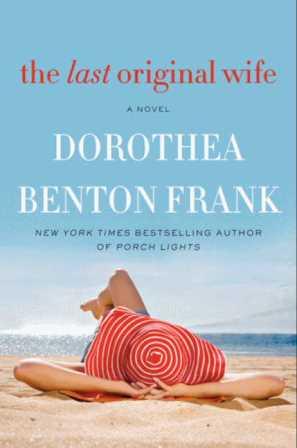
Review: The Last Original Wife by Dorothea Benton Frank

    The-Last-Original-Wife

  • Hardcover: 368 pages
  • Publisher: William Morrow; First Edition edition (June 11, 2013)
  • ISBN-10: 0062132466
  • Source: Publisher

Leslie Anne Greene Carter is just about to turn sixty. She married young to Wesley and a majority of her life has been devoted to being a good wife and a doting mother. In their Atlanta social circle, she is the last original wife. Wesley’s friends have all married young, stunningly beautiful women barely out of their twenties. She soon realizes that she has nothing in common with these women. Why must she try so hard to get along with women she doesn’t want to have anything to do with? To make matters worse, Wesley sees their marriage as more of a convenience. Leslie does everything for Wesley and their two adult children and finds that she has ignored her own needs and desires for far too long.

After a series of incidents pushes Leslie over the edge she decides to return to Charleston, her hometown, and stay with her brother in his stunning historical home. She takes the opportunity to do all the things she should have been doing all along. She is reunited with her old high school flame and together the two wine and dine in the luxurious and historical southern city. Finally Leslie discovers just what it is she wants out of life, a discovery that has been a long time coming.

Told in chapters alternating between Leslie and Wesley’s points of view, the intent of The Last Original Wife is to be a story of love, friendship, and self-discovery. I’ve been a long-time fan of this author’s work, relishing in the sweet southern setting. Unfortunately, I didn’t have quite the same reaction to this novel.

As a reader, I like a novel’s character to develop before my eyes, allowing me to make judgements and form my own opinion of that character as they are built up and revealed. In this case, however, I felt I was force-fed a character with no redeeming qualities whatsoever. I felt manipulated, in a sense.  I wanted to discover for my own what sort of character this man and I felt I missed out a lot by being forced to accept and honestly hate a character that was handed to me on a plate.

Additionally, I’m all about self-discovery and rebirth…but why is it that it has to involve a woman in an unhappy marriage with an absolutely despicable man? Anyone, even in the happiest of marriages, can undergo a need to discover oneself and embark on a journey to do so. In this novel, the intense distaste for Wesley’s character was so strong, I felt it really detracted from the story.  I wanted to celebrate Leslie’s journey with her but instead found myself shaking my fist and yelling each time I picked up the book. The overwhelming negative feelings prevented me from truly appreciate what I think was the author’s intended message in this novel.

This won’t deter me from reading Frank’s work in the future. She is such a talented writer that I would be missing out if I allowed one experience to detract me from reading her writing. While this isn’t the novel for me, perhaps other readers out there can overlook the issues that disturbed me so.

Thank you to TLC Book Tours for providing me the opportunity to review this title. Please be sure to check out the other stops along the way.

Posted in Review, William Morrow, Women's Fiction | 5 Comments

Review: The Illusion of Separateness by Simon Van Booy

  • Hardcover: 224 pages
  • Publisher: Harper; First Edition edition (June 11, 2013)
  • ISBN-10: 0062112244
  • Source: Publisher

In Simon Van Booy’s most recent masterpiece, he explores how characters that are seemingly unrelated are tied together, responsible for one another’s fate.The one thing that ties each of these individuals together is a seemingly insignificant act of kindness, an act that might have immediate meaning but instead developing in intensity as time passes. Like the phenomenon known as the butterfly effect, the actions of these characters have resounding effects and repercussions. Based on actual stories, this novel spans quite a bit of time, from New York in 1939 to World War II France, fast forwarding seven decades later to England and Los Angeles in 2010.

The characters are what truly bring this novel together into one truly brilliant piece of art. Hugo is a former German soldier, forever disfigured by war. Decades later, he continues to atone for his crimes. Martin works in a retirement home, Hugo is the most recent resident. Amelia is in her twenties, blind, searching for love as she works to create programs that benefit the blind at the Museum of Modern Art in New York City. John survived after his B-52 plane crashed over France, eventually joining the French resistance. Initially, this large magnitude of characters may appear confusing but the joy is in discovering how the lives of each of these individuals are intertwined.

Van Booy’s true skill is the magnitude in his brevity. In just a few short words, he can provide more meaning than what another author may provide in pages of detail. Each sentence is clearly well plotted out, each and every word has a purpose and meaning.  The revelation of each of the characters involvement in each other’s fate isn’t readily revealed; Van Booy provides his readers with a treat in devouring his eloquent prose as they pull away the veil of illusion that separates them.

I honestly do not think any other writer could have accomplished what Van Booy has done in The Illusion of Separateness. The premise is not necessarily a new or unique one, but Van Booy’s execution of these interconnecting story is what makes this novel so profound. In just a few short words, he evokes an overwhelming amount of emotion, bonding reader to character instantaneously. We forgive the characters for any crimes or ill-actions in their past, instantly developing a feeling of sympathy and adoration for what they have endured and for the gift they have given to one another.

The Illusion of Separateness, like all of Van Booy’s work I have read, has quite a profound effect on my life. Despite the fact that we all may have times in which we feel insignificant, each of us have some sort of impact on the world, be it big or small. It is up to us to decide just how large our footprint on the world will be. It is this sort of thinking and contemplation that truly outstanding writing evokes from me. Thank you, Simon Van Booy, for reminding me to strive farther and reach higher.

Thank you to TLC Book Tours for providing me the opportunity to review this title. Please be sure to check out the other stops in this tour.

Posted in Harper Books, Historical Fiction, Literary Fiction, Review | 11 Comments

Review: The Impossible Lives of Greta Wells by Andrew Sean Greer

  • Hardcover: 304 pages
  • Publisher: Ecco (June 25, 2013)
  • ISBN-10: 0062213784
  • Source: Publisher

When Greta’s twin brother passes away and a long-term relationship ends, Greta Wella is inconsolable, in a severe state of depression. Her doctor suggests a treatment involving electroshock therapy. The result is beyond what Greta could have imagined. After each treatment she awakens in another time, sent back to 1918, 1941, and the present.  In each of these times, her “alter ego” has a life vastly different than her own.  One is a devoted mother, the other a carefree adulteress. Yet in each of these lives, key characters missing in her “current” life are still present, including her deceased brother Felix and her beloved former lover.

Although these individuals, integral to her happiness in her present life, exist as part of her life they are a far cry from the individuals she knows them to be. Her brother, Felix, has not admitted his homosexuality, going as far to marry a young woman and have children than to confess his true identity. Nathan, her long-time lover who had an affair in her “present” life is her husband in one of the alternate times…but is she as devoted to him as she should be?

As Greta’s therapy continues, so do her jumps in time. As her therapy draws to an end, however, Greta can’t help but wonder which of these realities is the life she is meant to lead. Greta attempts herself to alter each of her lives but with incredibly powerful consequences.

Obviously, one must dispel quite a bit of disbelief in reading this novel. Greer doesn’t focus on how Greta is able to travel through time, instead focusing on the journey Greta takes in examining each of her alternate lives.  While I don’t feel I necessarily bonded a great deal with Greta as a whole, I largely feel that this was in part due to the fact that she was actually three distinct and different characters instead of just one. The fact that Greer was able to do such a monumental job in developing Greta’s characters, creating them with such vast differences yet still exhibiting the same core or essence of an individual,  is clear evidence to his talent as a writer.

At the core, this novel examines relationships: with family members, lovers, and one’s self. At the onset of her therapy, Greta’s doctor’s promised the treatment would return her to who she was. The journey she takes to get there, however, is more powerful and life-altering than she could have ever imagined. If you are looking for a novel with a truly unique premise, this is the title for you. Highly recommended.

Posted in Literary Fiction, Review | Tagged , , , | 2 Comments

It’s Monday! What Are You Reading This Week?

a1

It’s Monday! What Are You Reading This Week? This is a weekly event to list the books completed last week, the books currently being read, and the books to be finish this week. It is hosted by Sheila from One Person’s Journey Through a World of  Books so stop by and join in!

Books Completed Last Week


The Ocean at the End of the Lane by Neil Gaiman

Death of the Demon by Anne Holt
Studio Saint-Ex by Ania Szado
Whistling Past the Graveyard by Susan Crandall
The Illusion of Separateness by Simon Van Booy
The Impossible Lives of Greta Wells by Andrew Sean Greer


Currently Reading

The Last Original Wife by Dorthea Benton Frank
The Demonologist by Andrew Pyper (audio)

Books to Complete This Week


Tampa by Alissa Nutting (reread)

What are you reading this week?

Posted in It's Monday What Are you Reading This Week | 9 Comments

My Latest Obsession: The Ocean at the End of the Lane by Neil Gaiman

Typically, I reserve Fridays to review particularly terrifying and chilling books as part of my Frightful Friday feature. This Friday I thought I’d change things up a bit and instead showcase a book that I’ve become obsessed with as of late, The Ocean at the End of the Lane by Neil Gaiman.

I can’t tell you win I first discovered Gaiman’s writing. I can, however, share how each and everything this man has written has changed my life, allowing me to see the world in a completely new way. The Ocean at the End of the Lane is no different. In this novel, the reader is introduced to a nameless middle-aged man who has returned to his childhood home for a funeral. While the house is once lived in is gone, he gravitates to the farmhouse at the end of the lane. The site of an event that forever altered his life, the farmhouse almost calls out to him and instantly he is taken back in time to when he was seven years old and met a girl named Lettie Hempstock. The past that comes back is far too dark for any child to have actually experienced.

As a child, the young boy was quite bookish. Never having many friends, he instead found comfort in reading. The impetus for the drastic change in his life started with a suicide, sparking a series of events that brought darkness to the already dark and lonely world of this little boy.  The only light he sees in his world is young Lettie.  He recalls Lettie introducing him to a pond at the end of the lane.  She didn’t refer it it as a pond, though, for instead she insisted that small circle of water was actually an ocean.

Lettie has a feeling of uniqueness surrounding her. She seems to know far more than any child her age would ever know, an insight to the deepest and darkest parts of the world around her. It is this bond he has formed with this unique young girl that allows this young boy to face a host of dark and terrifying experiences brought upon him.

I don’t want to divulge too much about the synopsis for fear of taking away from your reading experience. At it’s core, The Ocean at the End of the Lane is a book about the innocence of childhood and what happens when that innocence is broken. In typical Gaiman style, this is all introduced in a dark, mythical and magical manner.

The main character is a young boy who escapes life by immersing himself in the world of the books he reads. For a child his age, he’s devoured books that are far beyond his years.  While he is still relatively young, he’s beginning to notice the differences between adults and children, how we all seem to lose a bit of our innocence and imagination as we mature.

Adult stories never made sense, and they were slow to start. They made me feel like there were secrets, Masonic, mythic secrets, to adulthood. Why didn’t adults want to read about Narnia, about secret islands and dangerous fairies.
 

Reading of this young boys childhood and the physical and emotional trek he is about to embark upon was incredibly heartwarming, taking me back to my own childhood.  I barely remember the moment when I realized that adulthood isn’t as magical and wonderful as childhood, but in reading this novel, I am reminded that there is still magic and wonder in our lives no matter our age. Through books like this, we have the ability to embark on a magical journey each time we open and turn the pages of a book.

Having read this book three times in the last two weeks, it is definitely one of those books that requires multiple reads for it is impossible to truly grasp it’s beauty and the sheer volume of the message portrayed in just one reading. This is a novel that will appeal to the likes of a wide range of readers, a book I plan on gifting to ever reader I know.  For this book is truly a gift, rewarding readers with a message that will resound forever within their heart and soul. Highly, highly, highly recommended.

Posted in Review, William Morrow | Tagged , , , | 13 Comments

Review: Death of the Demon by Anne Holt

  • Paperback: 288 pages
  • Publisher: Scribner; Reprint edition (June 18, 2013)
  • ISBN-10: 1451634803
  • Source: Publisher

Twelve-year-old Olav is the newest ward in a foster home outside of Oslo. It isn’t long before the staff realizes something isn’t quite right with Olav, the sheer hatred that shines in his eyes is quite evident. Removed from his mother’s care, Olav makes it apparent that he isn’t pleased with his new home, shouting curses and threats to the staff.

When the director of the foster home, Agnes Vestavik, is found dead at her desk, a kitchen knife plunged through her back and into her heart, Olav becomes the most obvious suspect. Yet he has disappeared from the walls of the foster home, roaming the streets of Oslo alone.

Hanne Wilhelmsen, recently promoted to chief inspector of the Oslo police, is assigned to the case. Working along detective Billy T., Hanne begins to not only investigate the murder but the disappearance of Olav as well. Immediately, she orders an investigation of the foster home and its staff.  Headstrong and independent, Hanne has a difficult time delegating her work and sharing her findings with others assigned to the case.  Her inability to trust others is not only a hindrance at the workplace but at home as well.   When the evidence begins mounting up, suggesting that one of the staff at the foster home is responsible for the director’s death, Hanne can’t shake the feeling that young Olav is somehow responsible. The investigation unveils a wealth of corruption within the fost home, including sordid affairs, fraud and larceny, just to name a few.

Meanwhile, Olav roams the streets alone, struggling to get back home to the mother. As the reader follows the investigation and Olav’s trek, his mother shares insight into his past and the mental illness that causes him to act with such malice and hatred. Starting at his birth, she knew something was wrong with her son.  It took her months to form any sort of bond with him, only when he was bordering on life and death did she have any feeling of love or nurturing toward him. Olav’s inappropriate behavior and poor social skills started when he was quite young, before entering school. This added detail about Olav’s character has the reader guessing, alongside Hanne, if this young boy is evil enough to have committed this horrendous crime.

While this is the third book in the Hanne Wilhelmsen series, Death of the Demon is well-suited as a stand-alone novel. Holt does a tremendous job of building up the characters, providing back-story as necessary. Her ability to build up and define each of the characters is so skilled that readers will find the most evil of characters sympathetic.

Holt’s critique and examination of the foster care system is quite enlightening. While she details a wide range of issues and faults with the foster home’s staff, she diminishes it by also noting the sheer amount of love and fondness they have for those in their care. The question remains, however: how much of what happens to those in the governments care can be blamed on inadequacies in the system and not on the individuals themselves?

What I found most remarkable about this novel was the twists and turns Holt takes her reader on, keeping one guessing until quite literally the last several pages of the book. While I can typically deduce the identity of the guilty party early on in a thriller, I found myself grasping at straw with this one. When all is revealed, I still found myself exclaiming “I KNEW IT” even though in fact I did not.

I have a feeling many may have issues with the ending but it is my opinion that it is one of the few plausible ways Holt could have conveyed the truth, without making it obviously apparent. It is Holt’s intent to keep her reader’s guessing, never trusting what is portrayed as the truth, even after the final pages have been turned.

Anne Holt is an Edgar Award nominated author and this novel just adds validity and proof of her sheer talent and skill. While her work is often compared to other Norwegian crime fiction greats, Holt can easily stand on her own as the queen of this subsection of crime fiction. Highly, highly recommended!


Posted in Review, Scribner, Simon & Schuster, Thriller | Tagged , , | 4 Comments

Guest Post & Giveaway: Ania Szado, Author of Studio Saint-Ex

Yesterday I had the pleasure of reviewing Studio Saint-Ex by Ania Szado, an eloquent historical fiction set in 1940s New York City.  Today I have the pleasure of welcoming Ania for a guest post in which she writes about inspiring coincidences behind the writing of her novel. 

Photo credit: Joyce Ravid

Photo credit: Joyce Ravid

Writing a novel can be exhilarating but also excruciating. It can seem, at times, as though forces beyond our conscious control are taking the reins or holding us back. No wonder we grasp for any indication that we’re on the right road. All the better if the signs are so odd and unexpected that they can’t be rationalized away.

I experience eerie and helpful coincidences as I worked on Studio Saint-Ex, a novel in which Antoine de Saint-Exupéry is writing The Little Prince in WWII Manhattan while navigating the devotion and ambitions of his fiery estranged wife and a beautiful young designer, Mignonne.

One delightful head-shaker relates to setting. I invented an elegant social club for WWII Manhattan’s French expats, including Saint-Exupéry. I put my “Alliance Française” where the Cartier store stands, across from the East 52nd Street studio where Saint-Ex worked on The Little Prince. Only later did a source check the real Alliance Française’s archives—and found that the membership had indeed borrowed space to gather in that exact location at that very time.

One stroke of luck had to do with character development. I struggled to get a handle on Mignonne’s vision and attitude as she grapples to become a star of New York’s fledgling fashion design scene. Then, midway through my least-organized research trip ever, I stumbled across a show at the Museum of the City of New York: the first exhibition to trace the forgotten legend of Valentina, a celebrity designer who brought sensuality and boldness to the fashion attitudes of WWII New York. Suddenly, I understood Mignonne’s ambitions for her career and her creativity. I spent the afternoon in the exhibit hall with tears of gratitude rising to my lashes.

The final incident makes me ponder the mystery of how characters speak to writers. Saint-Exupéry disappeared in flight in 1944. For half a century, no one knew what had become of his body or his plane. Then a fisherman in the Mediterranean caught the author’s identity bracelet in his nets. It was as though Saint-Exupéry had decided that the time had come to be found. It gave me hope that he would approve of my shining a light on his work through my own.

That seems to be the message of coincidences. They prod us to keep going. They promise that—out of the blue, if we do our part—the path and inspiration will appear.


Life’s little coincidences are quite moving, aren’t they?

Thanks to the publisher, I have one copy of Studio Saint-Ex for giveaway. This contest is open to US and Canadian residents only. To enter, please fill out the form below. The winner will be notified on Friday, June 28th.

Posted in Author Guest Post | 2 Comments

Review: Studio Saint-Ex by Ania Szado

  • Hardcover: 368 pages
  • Publisher: Knopf (June 4, 2013)
  • ISBN-10: 0307962792
  • Source: Publisher

Paris is currently occupied by the Germans. New York’s Mayor La Guardia believes he can make the city the new fashion capital of the world. Mignonne Lachapelle is a twenty-two year old woman, headstrong and eager to make herself known in the world of fashion design. Her designs are unique and border on risque. After her instructor and mentor pass some of her Mignonne’s design’s off as her own, Mignonne immediately seeks retribution and ends up working as her mentor’s assistant. It is here that she is reunited with French expatriate writer/war pilot, Antoine de Saint-Exupéry, a man whom she tutored in the English language a year previous.

Mignonne’s quest to make a name for herself becomes a bit more complicated with this reunion, particularly when Antoine’s wife, Consuelo, becomes one of her customers. Despite flaunting her many affairs before her husband’s eyes, Consuelo is quite desperate to win back the love and attention of Antoine. The three become consumed in the most complicated of love triangles, particularly when Consuelo enlists Mignonne in her attempts to win back her husband. Antoine is emotionally needy and vulnerable, reaching for Mignonne’s adoration to aid him as he writes his novel about a young prince, lost and exiled on earth after falling during his journey through the planets. In turn, Mignonne turns Antoine’s novel, The Little Prince, into a fashion show, all in a vain attempt to prevent Antoine from leaving her and enlisting in the war.

Szado’s Studio Saint-Ex captures so eloquently the tumultuous New York of the 1940s. The country, and the world, was embarking on a completely new manner of life, war with Germany looming. Despite the chaos that is looming, the reader becomes instantly immersed in setting of New York, just as the city’s introduction and fame in the fashion world is about to take off.  Having visited the city several times myself, I can visualize the city as it is now, yet also transported to a time when the Garment District was overrun with designers, vendors and the like.

The characters Szado creates are incredibly detailed and well-portrayed. Each are completely flawed yet it is difficult not to sympathize with each and every one of them. Mignonne is desperate to make a name for herself as a fashion designer. Her passion was so real and vivid that it comes alive on the pages. After being betrayed by her mentor, her determination only grows stronger, only lessening when yet another more tangible passion presents itself. Antoine’s own desperation and loneliness comes alive in his writing. He feels abandoned and lost in a country that is not his own, his potential also diminished as long as he’s prevented from living a life he so desperately needs to lead. And Consuelo…so vain yet also so needy of her husband’s love.

A fan of Saint-Exupéry’s children’s classic The Little Prince from childhood, I found it incredibly rewarding to read about his life as he wrote it, even if it is a fictionalized account.  Add that to the rich historical account of a blossoming fashion capital and it all adds up to a incredibly captivating, wholly remarkable and well-rounded novel. Even those not familiar with the brilliant work of Saint-Exupéry’s will be rewarded with an incredibly enriching experience. Highly, highly recommended.

Posted in Historical Fiction, Knopf, Review | Tagged , , , | 3 Comments

Frightful Friday: Joyland by Stephen King

Frightful Friday is a weekly meme in which I feature a particularly scary or chilling book that I’ve read that week.

This week’s featured title is Joyland by Stephen King:

  • Paperback: 288 pages
  • Publisher: Hard Case Crime; First Edition edition (June 4, 2013)
  • ISBN-10: 1781162646
  • Source: Personal copy

Devin Jones is a college student who recently had his heart broken. Attempting to escape his routine everyday life he applies for a job at Joyland, a little theme park that has avoided the commercialism of bigger parks like Disney.  He quickly picks up on the theme park way of life and becomes a jack-of-all trades, one minute running rides, the next donning “the fur” of the park’s mascot.

He isn’t at the park long before he hears rumors it is haunted by a young girl who was killed while in Joyland’s Horror House, her boyfriend slitting her throat and disposing of her body before the ride ended. Staff and guests alike have reportedly seen her ghost. Devin, having worked the theme park for a little while now, wonders why he hasn’t seen her.  Trying to get his mind off his lost love, Devin quickly becomes obsessed with learning more about her death, soon revealing that she was just one of many killed by this brutal serial killer.

Fans expecting Joyland to be classic King horror will be disappointed to learn that it is not;  it is much more. Instead, it combines a multitude of genres, including thriller, supernatural with a touch of horror. It’s a coming of age story set in the 1970s our country was going through a host of really difficult things, including the war in Vietnam and the rise of sexual freedom and feminism.  King, as he is known to do, brilliantly showcases and studies what is going on in the world by using this young man, this theme park, and a series of killings as vehicles of his message.

The characters King devises are rich and colorful, much like Joyland itself.  King mixes loners who have devoted their lives to working the theme park with a young mother and her dying son who has a special power. Only in a King novel will these things flow together so naturally and without flaws.

The best thing about this novel? While it isn’t the horror-filled King that many of us have grown to love, the fact that this level of terror is missing allows a whole new audience of readers, perhaps too turned off by horror, to embrace and discover King’s writing. Reminiscent of King’s Stand by Me, The Shawshank Redemptionand The Green Mile, Joyland demonstrates once again just how gifted King is when it comes to crafting a truly brilliant and moving novel. Highly, highly recommended.

Posted in Frightful Friday, Review, Thriller | Tagged , , , | 4 Comments